

On the road, when I’m driving somewhere with my two daughters and we stop at a red light, I ask them how much they can deduce about the people in the car in front of us just by studying the back of their car. This nerdy Sherlock-ian challenge is easier, of course, when there are bumper stickers to deduce from. It’s just a fun way (at least I think it’s fun) to wake up your curiosity and pay attention to the people around you. So it’s no surprise that I had a theological/cultural light-bulb moment yesterday, all because of a bumper sticker…
I parked at the health club I visit three times a week and looked in my rearview mirror. Directly across from me was a car I’d never seen before. How did I know? Well, the back of this little SUV was plastered—and I mean wallpapered—with bumper stickers. I can’t help myself, even though I was late for a fitness class. I stood behind that car and read a representative sampling of what this person thought was important for the world to know. One sticker, centered on the tailgate and bigger than the others, gave me the “organizing clue” I needed—it said, in bold lettering: “Where there’s a witch, there’s a way.”
Then, scanning the rest of her tailgate treatise, I saw political stickers and pet stickers and slogan-y stickers. But all them, somehow and someway, tied back to the organizing clue—this car is driven by someone who is very comfortable identifying her spirituality as a witch, and has lots of pragmatic advice that is propelled and informed by that identity. Reading the back of this woman’s car triggered a much broader observation—we live in an age of savage pragmatism. I mean, we want the things we spend our money on, the activities we invest in, and our relationships (even our relationship with God), to deliver for us. And that extends to our spiritual life as well. Witchery is an attempt to use spirituality to make things work for us.
It would be a mistake to assume that the people who are not showing up to church anymore have stopped pursuing spirituality in their life. We know, from countless surveys and research reports, that the vast majority of people consider themselves “spiritual.” For example, the Pew Religious Landscape Study found that almost three-quarters of Americans (70 percent) describe themselves as spiritual in some way. Why are so many “spiritual” people so open to spiritual practices that have nothing to do with the church? I think Australian pastor and cultural savant Mark Sayers has a fascinating take on that…
On his excellent Rebuilders podcast, Sayers argues that Western culture is moving into a new spiritual epoch that straddles traditional religious practices and traditional secular practices. He calls this “pragmatic fringe spirituality.” People are pursuing a wide variety of spiritual flavors in their life, primarily because they seem to “work.” For example, Sayers says that today’s young people aren’t that interested in “Is it true?” They want to know “Does it help?” He points to the widespread interest in meditation, psychedelics, astrology, “manifesting,” crystals, ancestral spirituality, tarot readings, breathwork, and AI-generated spiritual guidance. They are not looking for theological truth; they’re looking for pragmatic ROI.
One last observation from Sayers: Our digital culture is helping to bend the culture-wide gravitational pull toward things that work over things that are true. Social media exposes people to an endless stream of so-called mystical experiences, conspiracy theories, wellness practices, and spiritual techniques. The digital curation of our spiritual life leads to syncretic combinations of spiritual practices that promise results.
In the face of this church-alternative path to spiritual meaning, it’s tempting to reinvent what we’re doing to appeal to this pragmatic hunger in people. But I think that’s a mistake—it’s missing the opportunity in front of us. When people pursue, en masse, alternate spiritual practices that promise pragmatic results, they are consuming the “bread of death,” not the “bread of life.” I mean, what they are taking into their soul will not feed the soul for very long—you can eat your breakfast at the donut shop every day and feel satisfied in the moment, but your body will eventually expose the impact of those empty calories. What is percolating in the souls of those who have switched their diet from Christian community to pragmatic spirituality? A hunger for transcendent beauty that has nothing to do with “what works.” We don’t marry because it “works;” we marry because we are caught up in wonder and passion.
People don’t need to know why following Jesus “works”—that’s giving in to the temptation to pander. What they need is to “taste and see” that He is good, and good beyond their expectations or their assumptions. They don’t need us to appeal to their pragmatic sweet-tooth; they need us to re-introduce the Jesus who confounds, upends, and drops us to our knees in wonder and delight. They need a meal that fills their soul, and sooner or later, they’ll come looking for it. When they do, what will we be serving? What’s on our table, says Brennan Manning, must be a feast sourced in the heart of Jesus: “It must be noted that Jesus alone reveals who God is… We cannot deduce anything about Jesus from what we think we know about God; however, we must deduce everything about God from what we know about Jesus.”
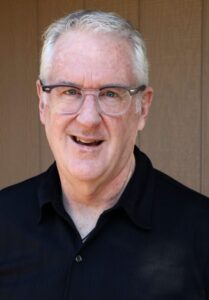
Rick Lawrence is Executive Director of Vibrant Faith—he created the new curriculum Following Jesus. He’s editor of the Jesus-Centered Bible and author of 40 books, including his newest Editing Jesus: Confronting the Distorted Faith of the American Church, The Suicide Solution, The Jesus-Centered Life and Jesus-Centered Daily. He hosts the podcast Paying Ridiculous Attention to Jesus.